
The starting point looked routine
2003 builder home in Owasso. Original roof, 21 years old, due for replacement. Homeowner was paying cash. The pre-tear-off inspection was unremarkable: bald shingles, some granule loss, no obvious sag.
The story changed when we pulled the shingles. Original builder ventilation had been undersized for the attic volume. The soffit intake was almost fully blocked by insulation that had migrated over two decades. Hot, moist attic air had nowhere to go and had been condensing on the underside of the decking every winter for years.
What we found
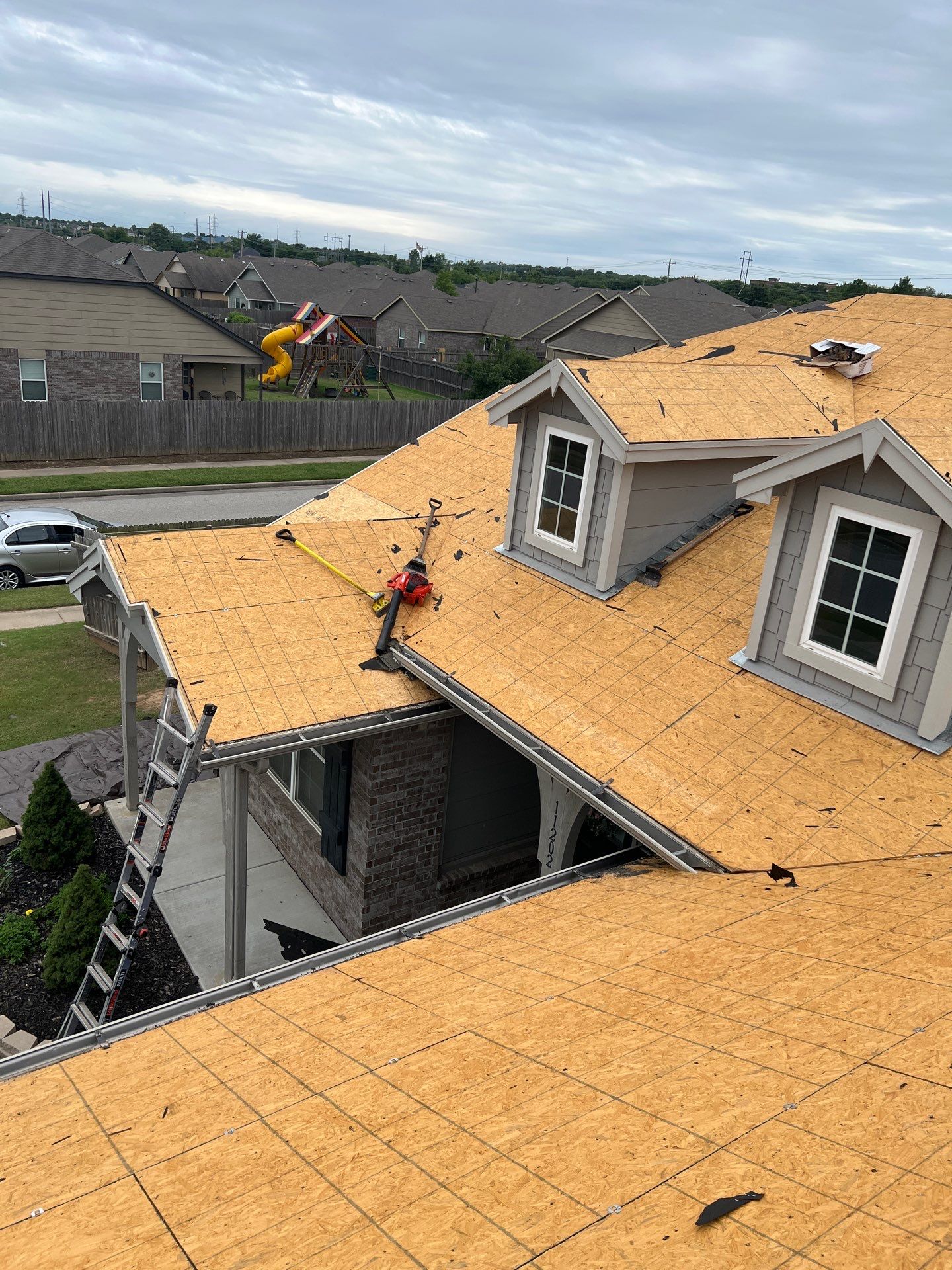
23 sheets of decking either rotted, delaminated, or showing active mold colonies. Mostly along the north slope and in the valleys. Every sheet documented with photos, marked, and removed.
We called the homeowner up onto the scaffolding so they could see exactly what we were dealing with. Decking replacement on this scale isn't part of any standard estimate, and we don't pretend it is. We gave them the change-order number on the spot.
The rebuild
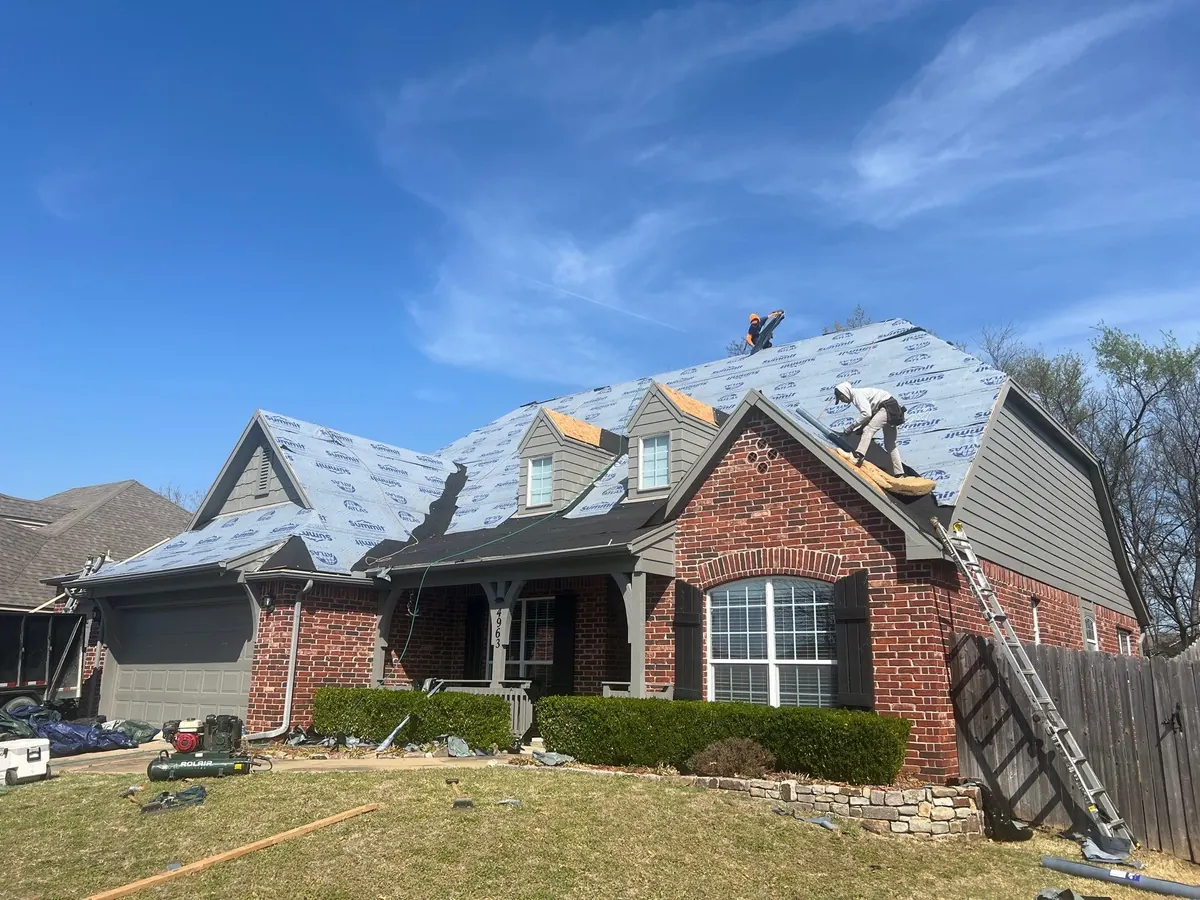
23 sheets of fresh OSB. Continuous baffles in every rafter bay to keep insulation from re-blocking soffit intake. Ridge vent rebuilt to balance the new intake. Ice-and-water shield in every valley.
Atlas Pinnacle Pristine in Pewter installed by 5:30 PM on a long day. Attic is now ventilated the way it should be, and the decking under the new roof will outlast another two replacements.
Project photos
Frequently asked
How common is this much decking damage?
More common than most homeowners think on Tulsa-metro homes built between 1995 and 2010. Builder-spec ventilation was undersized on a lot of those homes, and the consequences show up under the second roof.
Did insurance cover the decking?
No, this was a cash project and the damage was wear, not storm. We documented it for the homeowner's records but it's not a claim event.
What did the decking cost?
$2,140 for materials and labor on the 23 sheets. We charge per sheet so the homeowner only pays for what's actually replaced.